
Now the most important types of touch screens: resistive (double-layer) touch screen, surface capacitive type and inductive capacitive type, surface acoustic wave type, infrared type, as well as bending wave type, active digitizer type and optical imaging type. However, they can be divided into two types. One type requires ITO, such as the previous three touch screens, and the other type of structure does not require ITO, such as the latter types of screens. In the current market, resistive touch screens and capacitive touch screens using ITO materials are the most widely used.
Touch screens are everywhere around us. In the field of personal portable devices such as PDAs, touch screens not only save space, are easy to carry, but also have better human-computer interaction.
Resistive touch screen
ITO is the English abbreviation for tin oxide, which is actually a transparent electrical conductor. It can adjust the properties of this substance by adjusting the ratio of indium and tin, the deposition method, the degree of oxidation, and the size of the crystal grains. Thin ITO material has good transparency, but its impedance is high; thicker ITO material has lower impedance, but its transparency will be worse. When depositing on PET polyester film, the reaction temperature should drop below 150°C, which will lead to incomplete oxidation of ITO. In subsequent applications, ITO will be exposed to the air or air barrier. The area resistance changes with time due to auto-oxidation. This makes the resistive touch screen need frequent calibration.

Figure 1 shows a cross-sectional side view of the resistive touch screen. The surface touched by his finger is actually a hard coating to protect the underlying PET layer. The PET layer is a very thin and flexible PET film. When its surface is touched, it will bend downwards and allow the two layers of ITO coating below to contact each other and connect the circuit at this point. Between the two ITO layers are some isolation fulcrums about one thousandth of an inch thick to separate the two layers. At the bottom is a transparent hard bottom layer, which is used to support the structure above, usually made of glass or plastic.
The multi-layer structure of the resistive touch screen will cause a large light loss. For handheld devices, it is usually necessary to increase the backlight source to compensate for the problem of poor light transmission, but this will also increase the battery consumption. The advantage of resistive touch screen is that its screen and control system are relatively cheap, and the response sensitivity is better.
Capacitive touch screen
Capacitive touch screens also need to use ITO materials, and its power consumption is relatively low and long life, but the higher cost has always made it less concerned. The friendly man-machine interface and smooth operating performance of the iPhone introduced by Apple have made the capacitive touch screen popular in the current market, and various capacitive touch screen products have appeared one after another. And with the progress of the process and mass production, its cost is also declining, and it has begun to gradually replace the resistive touch screen.

The surface capacitive touch screen only uses a single layer of ITO. When a finger touches the surface of the screen, a certain amount of electric charge will be transferred to the human body. In order to recover these charge losses, charges are added from the four corners of the screen. The amount of charge added in each direction is proportional to the distance of the touch point. From this, we can calculate the specific location of the touch point.
The ITO coating of surface capacitance usually requires linearized metal electrodes on the periphery of the screen to reduce the influence of the corner/edge green effect on the electric field. Sometimes there may be an ITO shielding layer under the ITO coating to block noise. The surface capacitive touch screen needs to be calibrated at least once before it can be used. Compared with the surface capacitive touch screen, the inductive capacitive touch screen can penetrate a thicker cover layer and does not require correction. Inductive capacitive etching of different ITO modules on two layers of ITO coatings needs to consider factors such as the total impedance of the modules, the impedance of the connecting wires between the modules, and the parasitic capacitance generated at the intersection of the two layers of ITO modules. And in order to detect the finger touch, the area of the ITO module should also be smaller than the area of the finger. When a pod-shaped pattern is used, the diagonal length is usually controlled at about 4 to 6 mm.

In Figure 3, the green and blue ITO modules are located on the two layers of ITO coating. They can be regarded as tear strips that change continuously in the X and Y directions, and different ITO modules in the X and Y directions are required. Scan separately to obtain the location of the touch point and the trajectory of the touch. Between the two layers of ITO coating is a PET or glass isolation layer. The latter has better light transmittance, can withstand greater pressure, and has a higher yield. It can be directly plated on the LCD surface through a special process, but Heavier too. The thinner this isolation layer, the better its light transmittance, but the greater the parasitic capacitance between the two layers of ITO.
The touch position detected by the inductive capacitive touch screen corresponds to the cross point where the maximum capacitance change value is sensed. For the X-axis or Y-axis, it is the weighted average of the signal quantities of different ITO modules to obtain the position quantity. The system then The touch point and track are displayed on the LCD below the touch screen.
When there are two finger touches (two red dots), there will be two maximum values on each axis. At this time, there are two possible combinations, and the system cannot accurately locate and judge. This is what we usually call Mirror dots (two blue dots).
In addition, under the touch screen is the LCD display. Its surface is also conductive. This will generate parasitic capacitance with the ITO mold of the ITO coating nearby. We usually need to keep a certain amount between the two layers. The air layer to reduce the influence of parasitic capacitance.
Capacitive touch screen advantages
In the design of touch screen products, it is necessary to weigh performance and cost. The cost of resistive touch screens is low, the competition is fierce, and there are certain limitations in performance and applications.
1. The capacitive touch screen only needs to be touched, and does not need pressure to generate a signal.
⒉. The capacitive touch screen only needs to be corrected once or not at all after production, while the resistance technology requires regular correction.
3. The service life of the capacitive solution will be longer, because the components in the capacitive touch screen do not need any movement. In resistive touch screens, the upper ITO film needs to be thin enough to be flexible, so as to bend downward to connect to the lower ITO film.
4. Capacitor technology is superior to resistive technology in terms of light loss and system power consumption.
5. The choice between capacitive technology or resistive technology is mainly determined by the object that touches the screen. If it is touched by a finger, a capacitive touch screen is a better choice. If you need a stylus, whether it is plastic or metal, a resistive touch screen can do the job. Capacitive touch screens can also use a stylus, but a special stylus is required to cooperate.
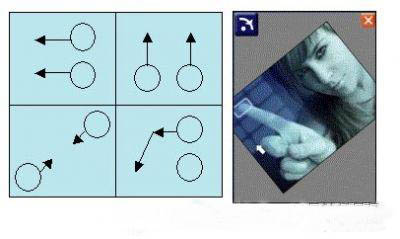
6. The surface capacitive type can be used for large-size touch screens, and its cost is low, but currently cannot support gesture recognition; the inductive capacitive type is mainly used for small and medium-sized touch screens, and can also support gesture recognition.
7. Capacitive technology is wear-resistant, has a long life, and the user has low maintenance costs when using it. Therefore, the overall operating cost of the manufacturer can be further reduced. The development trend of capacitive touch screen
Capacitive touch screens are now used on iPhones and other handheld devices. Single-point trajectory positioning/simulating double-click on a mouse is its most basic function. The recognition and application of multi-finger gesture operations has become a hot spot in the current market. In portable applications, the user holds the device in one hand and can only operate it with the other hand. Therefore, it is particularly important to recognize multi-finger grasping/translation, extension/compression, rotation; page turning and other gesture operations.