


Each manufacturer will conduct an aging test on the LCD screen before it leaves the factory, in order to troubleshoot and check the shortcomings of the screen. In this way, the inflow time of the unqualified screens is subtracted, causing consumers' losses.
Then the aging test is divided into two steps: high temperature and voltage. -:high temperature
Regardless of whether it is a high temperature or a voltage test screen, it needs to be carried out at a higher temperature, and the driving voltage of the panel needs to be adjusted to an appropriate value.
High-temperature aging is divided into three stages: early, middle and late, namely early failure period, accidental failure period and consumption loss validity period, which are collectively referred to as the failure curve principle. Using this principle, the LCD screen can accelerate the deterioration of its own shortcomings, and then eliminate them.
In these three stages, the early expiration period is particularly important, because in this stage, most of the deficiencies of the LCD screen will be exposed. It may be a problem of design, production materials, or technical defects in the production process, etc.; then it enters the accidental expiration period; and then the consumption loss validity period.
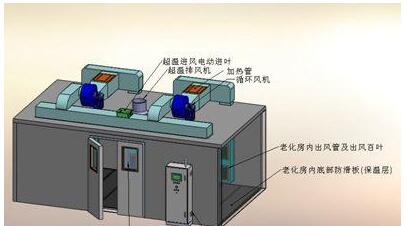
This process is usually carried out at a temperature of minus 20 degrees Celsius -79 degrees Celsius, and takes up to 8-24 hours; then it is taken out, and manual inspection is required after it is taken out.
Two: voltage
The voltage aging test is to detect the high or low voltage that the LCD liquid crystal display can accept, so as to check the stability of the panel and obtain the appropriate voltage value of the panel.
This process is carried out by observing the voltage waveform through an oscilloscope. When the panel screen keeps flickering, there are two situations:
One is the inconsistency between the positive and negative voltages of the voltage, and the second is the sequelae after high-temperature aging. The original voltage design value is deviated from the pixel voltage.
All this needs to be solved by adjusting the voltage value. When the voltage value is a suitable value, the screen naturally stops flickering. The aging test is a step that every LCD screen manufacturer needs to do, and I hope it can be taken seriously!





