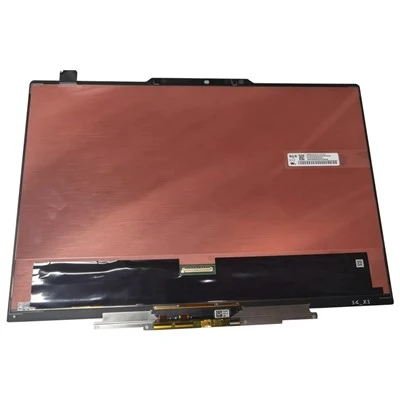
Introduction to the role of each component of the TFT liquid crystal display
TFT liquid crystal screen is equipped with a semiconductor switch for each pixel, and its processing technology is similar to that of a large-scale integrated circuit. Since each pixel can be directly controlled by dot pulses, each node is relatively independent and can be continuously controlled. This design not only improves the response speed of the display screen, but also accurately controls the display gray level, so TFT liquid crystal The colors are more realistic.
The function of each component will be introduced one by one below.
Light diffuser: The light emitted by the backlight can be evenly distributed to each pixel after passing through the light diffuser;
Storage capacitor: its capacity is about 0.5PF, and its two poles are connected with the transparent display electrode/transparent common electrode,
Since the capacity between the transparent display electrode and the transparent common electrode is about 0.1PF, it cannot maintain the charged voltage until the next time the screen is updated (for example, when the refresh rate is 60HZ, the retention time is about 16MS), so you need to use The storage capacitor is retained;
TFT: Thin film transistor is a switching device that determines whether the liquid crystal is charged (the thin film transistor only plays the role of on or off. When the thin film transistor is on, it outputs voltage from its source to charge the liquid crystal and storage capacitor. The level of the charging voltage, Determined by the LCD screen drive circuit);
Row electrode: scan electrode, also called gate bus, connected to the gate of the thin film transistor in each sub-pixel;
Column electrode: the signal electrode, also called the drain bus, is connected to the drain of the thin film transistor in each sub-pixel;
Glass bottom plate: used for isolation;
Polarizing glass plate: the polarizing plate, the inner polarizing glass plate 1 is a horizontal opening, and the outer polarizing glass plate is a vertical opening;
Transparent display electrode: connected to the source of each thin-film transistor, forming a charging electrode together with the transparent common electrode to charge the liquid crystal in each sub-pixel;
Color filter: also known as color filter, it is a piece of glass composed of many transistors. The LCD screen needs to display a color image, usually by adding a color filter between the transparent common electrode and the polarizing glass plate. After the light penetrates the liquid crystal layer, it passes through the color filter. Since the color filter is arranged in three colors of red, green and blue in the horizontal direction, the three colors of R, G, and B are divided into independent three. Each point corresponds to a sub-pixel. The three adjacent points R, G, and B have different grayscale changes and constitute a pixel at the same time. Many pixels with different grayscale changes are based on the principle of spatial addition and color mixing. So that we can see a colorful picture.