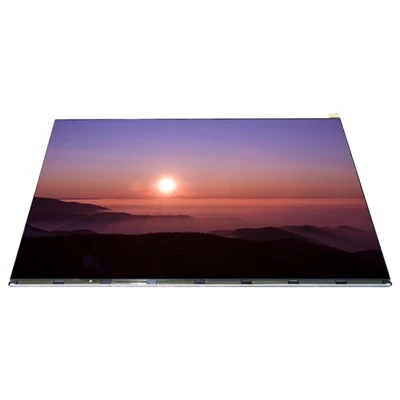

The presentation of the image on the screen relies on the combination of pixels. This kind of pixel is usually composed of three sub-pixels of RGB (red, green and blue). Since the liquid crystal material itself does not emit light, the white light emitted by the backlight unit (BLU, Backlight Unit) passes through the polarizer and the liquid crystal material, and illuminates the color filter (Color Filter) engraved with pixels to display the color. Compose image

(Source: Toyo Visual)
Among them, the role of Liquid Crystal is similar to a "blind" under the RGB sub-pixels. Under the voltage applied by the upper and lower electrodes (Electrodes), the liquid crystal material will present different arrangements. Combining the two front and rear polarizers that control the light polarization direction, the light source illuminating the RGB sub-pixels is "shielded" to varying degrees, making a single pixel The dots appear in different colors. The "switch" that controls the shielding state of the "blinds" is the thin film transistor (TFT) corresponding to the pixel point, which is why a TFT is required before TFT-LCD

(Image source: TOYO Visual)
The manufacturing process of the LCD panel is divided into three steps in the industry, which are the front Array, the middle Cell, and the rear Module.