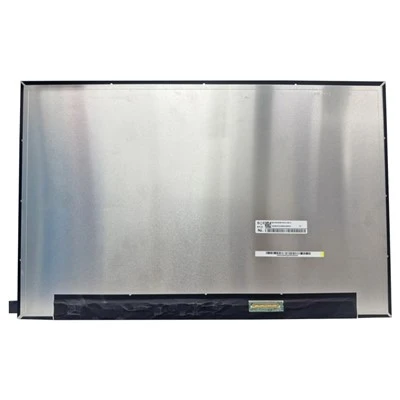
Liquid crystal display, a flat, ultra-thin display device consisting of a certain number of color or black-and-white pixels placed in front of a light source or reflection. LCD is very low power consumption, so it is favored by engineers and suitable for electronic devices using batteries. Its main principle is to stimulate liquid crystal molecules by electric current to produce point, line and surface with the back lamp tube to form a picture. The working principle of liquid crystal display: liquid crystal is a special substance between solid and liquid. It is an organic compound, normally liquid, but its molecular arrangement is as regular as that of solid crystals, so it is named liquid crystal. Another special property is that if an electric field is applied to the liquid crystal, its molecular arrangement will be changed. If a polarizer is applied to the liquid crystal, it will have the function of preventing the light from passing through (when the electric field is not applied, the light can pass through smoothly). If the color filter is used to change the voltage applied to the liquid crystal, the amount of light transmittance of a certain color can be changed. It can also be figuratively said that changing the voltage at both ends of the liquid crystal can change its light transmittance (but in practice, it must cooperate with the polarizer).