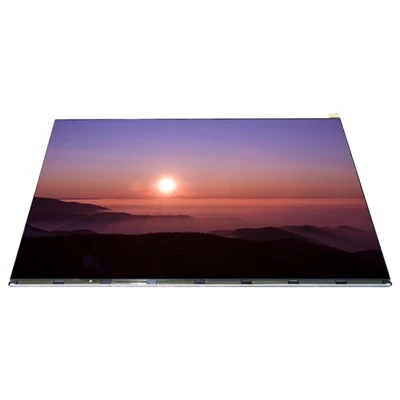

For more sophisticated color displays that need to be used in laptop or desktop LCD displays, there should also be a special color filter layer for color display. Usually, in a color LCD panel, each pixel is composed of three LCD cells, each of which has a red, green, or blue filter in front of each cell. In this way, different colors can be displayed on the screen by light from different cells.
LCD overcomes the shortcomings of CRT such as huge volume, power consumption and scintillation, but at the same time, it also brings some problems, such as high cost, poor viewing angle and poor color display. CRT display can choose a series of resolutions, and can be adjusted according to the requirements of the screen, but the LCD screen only contains a fixed number of LCD units, only one resolution display can be used in the full screen (each unit is a pixel).
CRT usually has three electron guns. The emitted electron beam must be accurately focused, otherwise it will not get a clear image display. But there is no focusing problem in LCD, because each LCD unit is switched on and off separately. That's why the same picture is so clear on the LCD screen.
LCD does not need to care about refresh frequency and flicker, LCD unit either on or off, so the image displayed at low refresh frequency of 40-60 Hz will not flicker than the image displayed at 75Hz. However, LCD screen LCD units are prone to defects. For 1024 *768 screens, each pixel consists of three units, each responsible for red, green and blue displays, with a total of about 2.4 million units (1024 *768 *3 = 2359296). It is difficult to ensure that all these units are intact.
Most likely, some of them have been short-circuited (bright spots) or broken (black spots). So, not so expensive display products will not appear flaws.
LCD displays contain something that has not been used in CRT technology. The light source for the screen is the fluorescent tube coiled behind it. Sometimes, you will find a part of the screen with unusually bright lines. There may also be some indecent stripes. A special light or dark image will affect the adjacent display area. In addition, some fairly sophisticated patterns (such as jitter-processed images) may have ugly ripples or interference patterns on the LCD screen.
Nowadays, almost all LCDs used in notebook or desktop systems use thin film transistors (TFTs) to activate cells in the liquid crystal layer. TFT LCD technology can display clearer and brighter images. Early LCD is a non-active light-emitting device, which has low speed, poor efficiency and low contrast. Although it can display clear text, it often produces shadows when displaying images quickly, which affects the display effect of video. Therefore, it is only used in handheld computers, pagers or mobile phones that need black-and-white display.
With the rapid development of technology, LCD technology is also developing and progressing. At present, major LCD display manufacturers have increased the cost of research and development of LCD, striving to break through the technical bottleneck of LCD, further accelerate the industrialization process of LCD display, reduce production costs, and achieve the price level acceptable to users.
The LED display is also a kind of LCD. The technology of LED LCD is an advanced LCD solution. It uses LED instead of the traditional LCD backlight module. High brightness, and can achieve stable brightness and color performance in the life span. Wider gamut (more than NTSC and EBU gamut) to achieve more brilliant color. It is very easy to control the power of LED, unlike CCFL, there is a threshold for the lowest brightness.
Therefore, it is easy for users to adjust the brightness of display devices to the most pleasant state, whether in bright outdoors or all-black indoors. Mercury is one of the most important elements in LCD with CCLF cold cathode fluorescent lamp as backlight, which is also known as mercury, and this element is undoubtedly harmful to human body. Therefore, many LCD panel manufacturers have invested a lot of energy in the production of mercury-free panel. For example, the mercury-free LED backlight technology adopted by Asus, a well-known IT manufacturer in Taiwan, has passed the ROHS certification, making MS series products save more than 40% energy than traditional CCFL displays. Mercury-free technology not only makes them non-toxic and healthy, but also more environmentally friendly and energy-saving than other products.
Because of the use of solid-state light-emitting devices, LED backlight has no delicate components, and is very adaptable to the environment, so the use of LED temperature range is wide, low voltage, impact resistance. Moreover, LED light source does not produce any radiation, low electromagnetic radiation, mercury-free can be said to be a green environmental light source.
Summarize the advantages of LED LCD: LED LCD TV has the advantages of power saving, environmental protection and more real color.