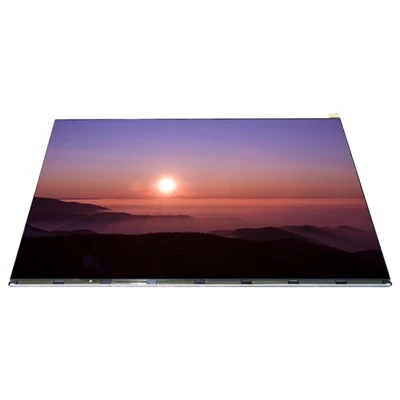

To trace the origin of LCD, we must start with the birth of LCD. In 1888, an Austrian botanist, Friedrich Reinitzer, discovered a special substance. He extracted a compound from plants called spiral toluene salts, which, when heated, was found to have two melting points at different temperatures.
Its state is somewhat similar to the colloidal solution of soap water, but it has both liquid and crystalline properties in a certain temperature range. Because of its unique state, it was later named "liquid Crystal", which means liquid crystalline substance. However, although liquid crystal
It was discovered as early as 1888, but it was 80 years later that it was really useful for the things around life.
In 1968, engineers at the Shanov R&D Center of RCA (Radio and Television Inventory) in the United States found that LCD molecules were affected by voltage, changing their molecular alignment and deflecting incoming light. Using this principle, RCA invented the world's first LCD screen. Later, LCD technology was widely used in general electronic products, such as calculators, electronic watches, mobile phone screens, instruments used in hospitals (because of the consideration of radiation measurement) or screens on digital cameras, etc. It is interesting to note that liquid crystals were discovered earlier than vacuum tubes or cathode ray tubes, but not much was known about this phenomenon until 1962, when the first book was published by Joe Castellano, a chemist at the RCA Research Group.Like image tubes, these two technologies were invented by RCA in the United States, but developed by Sony and Sharp in Japan respectively.