


OLED, or organic light-emitting diode, is also called organic electro-laser display. Because of its characteristics of lightness, thinness and power saving, this display device has been widely used in MP3 players since 2003. For DC and mobile phones that belong to digital products, only OLEDs have been shown in some exhibitions. The engineering samples of the screen have not yet entered the stage of practical application. However, OLED screens have many advantages over LCDs.
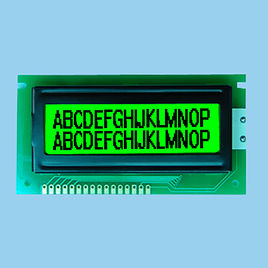
TFT means that each liquid crystal pixel on the liquid crystal display is driven by a thin film transistor integrated behind it. Thus, high-speed, high-brightness and high-contrast display screen information can be achieved. TFT-LCD (Thin Film Transistor Liquid Crystal Display) is one of most liquid crystal displays.
The basic structure of OLED is a thin and transparent tin oxide (ITO) with semiconductor characteristics, which is connected to the positive electrode of electricity, and another metal cathode is added to form a sandwich structure.
The entire structure layer includes: hole transport layer (HTL), light emitting layer (EL) and electron transport layer (ETL). When the power is supplied to an appropriate voltage, the positive electrode holes and the negative electrode charges will combine in the light-emitting layer to produce light. The three primary colors of red, green and blue are produced according to their different formulations, which constitute the basic colors.
The characteristic of OLED is that it emits light by itself. Unlike TFTLCD, which requires a backlight, it has high visibility and brightness, followed by low voltage requirements, high power saving efficiency, fast response, light weight, thin thickness, simple structure, and low cost.
TFT generally refers to thin film liquid crystal displays, but actually refers to thin film transistors (matrix)-can "actively" control each independent pixel on the screen, which is the origin of the so-called active matrix TFT. So how is the image produced? The basic principle is very simple: the display screen is composed of many pixels that can emit light of any color, and the purpose can be achieved by controlling each pixel to display the corresponding color.
In TFT LCD, backlight technology is generally used. In order to accurately control the color and brightness of each pixel, it is necessary to install a shutter-like switch after each pixel. When the "blinds" are opened, light can pass through. When the shutters are closed, light cannot pass through. Of course, technically, it is not as simple as the one just mentioned.
Although OLEDs with better technologies will replace LCDs such as TFTs in the future, organic light-emitting display technologies still have short-lived and difficult-to-large screens. The structure of OLED can visually compare each OLED unit to a hamburger. The light-emitting material is the vegetable sandwiched in between, and each OLED display unit can produce three different colors of light under control. Like LCD, OLED has active and passive distinctions. In the passive mode, the cell selected by the row and column address is lit; in the active mode, there is a thin film transistor (TFT) behind the OLED unit, and the light-emitting unit is lit by the TFT drive. In the current situation, passive OLEDs are more power-saving, but active OLEDs have better display performance.





