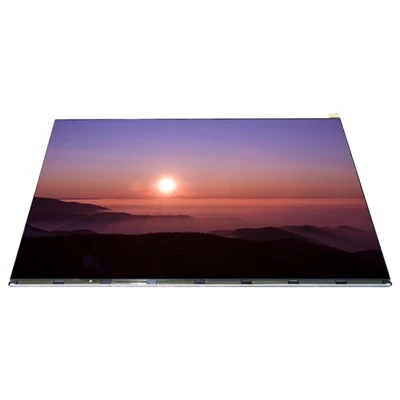

Among the differences between LED and LCD, the author has already mentioned that TFT-LCD is one of the most liquid LCD (LCD) from the naming, but this is also true. From the following about the film The advantages of the transistor liquid crystal display (TFT-LCD) can be clearly understood from the LCD.
Advantage 1: The display area is large, and the display angle is wide
TFT-LCD can have a larger display area than other LCDs. At present, there are dozens of inches of TFT-LCD in the digital city, and some other types of liquid screens generally do not exceed 20 inches in size. Now the best TFT-LCD has a vertical and horizontal viewing angle of 178°, which is unattainable by some other LCDs.
Advantage 2: High integration of the chip and better use characteristics
The resolution of the 1.3-inch TFT chip used in liquid crystal projection is that XGA contains millions of pixels. The 16.1-inch TFT array with a resolution of SXGA (1280×1024), the film thickness of amorphous silicon is only 50mm, and the TABON GLASS and SYSTEMON GLASS technologies, the integration of its IC, the requirements for equipment and supply technology, and the technical difficulty are all Exceed the traditional LSl. Low-voltage applications, low driving voltage, and solidified use safety and reliability are improved; flat, light and thin.
Advantage 3: The quality of the display is good, and the harmful radiation is also low
TFT was first used as a matrix display circuit to improve the light valve characteristics of its liquid crystal. For high-resolution LCD screens, through voltage adjustment in the range of 0-6V (the typical value is 0.2V to 4V), the precise control of the object elements is realized, so that the LCD achieves high-quality and high-resolution display effects. It's possible. TFT-LCD is the first flat liquid screen in human history that surpasses CRT in display quality. Now people are gradually beginning to integrate the driver IC on the glass substrate, and the function of the entire TFT will be more powerful, which is unmatched by those traditional large-scale semiconductor integrated circuits. No radiation, no flicker, no harm to the user's health. Especially the emergence of TFT-LCD e-books will bring mankind into the era of paperless office and paperless printing, and trigger a revolution in the way of human learning, dissemination and memorization of civilization.
Advantage 4: Low production cost and many manufacturing processes
Glass substrates and plastic substrates have fundamentally solved the cost problem of large-scale semiconductor integrated circuits, and opened up a broad application space for the application of large-scale semiconductor integrated circuits. In addition to the use of sputtering, CVD (Chemical Vapor Deposition), MCVD (Molecular Chemical Vapor Deposition) and other traditional processes for film formation, laser annealing technology has also begun to be applied, which can produce amorphous films, polycrystalline films, and single The most film. Not only silicon films can be made, but also other Ⅱ-VI group and Ⅲ-V group semiconductor thin films can be made.
Advantage five: wide range of applications, wide application areas
It can be used normally within the temperature range of -20°C to +50°°C, and the low temperature working temperature of TFT-LCD after temperature strengthening treatment can reach minus 80°C. It can be used as a mobile terminal display, a desktop terminal display, and a large-screen projection TV. It is a full-size video display terminal with relatively good performance. Liquid crystal flat panel displays based on TFT technology are the pillar industry of the information society, and their technology can also be applied to the rapidly growing thin film transistor organic electronic light-emitting (TFT-OLED) flat panel displays.
Since 2004, TFT-LCD has gradually replaced other LCD screens and CRT monitors in the large-size display market with its huge advantages in various aspects.