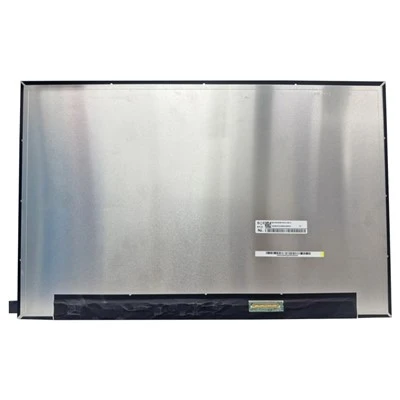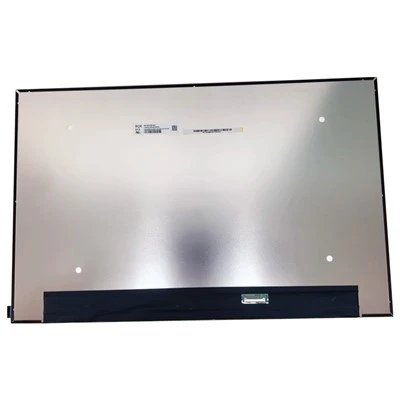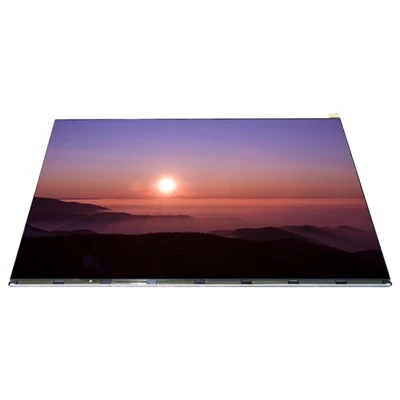

The control light of the LCD screen is completely dependent on the light transmitted through the twisted control of the liquid crystal molecules, which produces a bright spot of a pixel, and then most of the bright spots of the pixels are combined to form an image.
During the display process of the LCD signal, the lighting time of this pixel light spot must last until the time when an image of the LCD signal is fully displayed on the screen (the time standard for the reproduction of an image in the SDTV signal is 20ms) standard. In the CRT TV display, this time is mainly realized by the afterglow of the phosphor on the CRT screen. And there is no afterglow on the LCD screen, so-in the early LCD screen, it can only be used for character display, and cannot display the image signal of the TV. It was not until the TFT LCD screen was invented that the LCD screen could be used to reproduce the signal of the TV image.
In modern LCD screens, the control of the duration of light spot display relies on the pixel signal to charge the capacitor through a switch, and the electric field formed by the voltage of the capacitor controls the distortion of the liquid crystal molecules. Since the voltage on the capacitor can be maintained for a long time, the bright spot can be controlled for a long time. Then we only need to install a "switch" on the capacitor, and the image signal will pass through it every time 20ms have passed. The “switch” charges and discharges the capacitor once, so that the fundamental purpose of using the LCD screen to display the current TV image signal is achieved, as shown in the figure below.

In this way, a "switch" must be installed on every electric field that passes through a pixel of light that we control. For example, an LCD screen that displays SDTV signal standards has 1.5 million such "switches". These switches are "thin film field effect switches" that are made one by one while producing LCD screens. The English name of thin film field effect transistors is ThinFilmTransistor. According to habits, among each word, take one of them. The first letter of, then it is abbreviated as TFT. The TFT liquid crystal screen means that each liquid crystal pixel on the liquid crystal display is driven by a thin film transistor integrated behind it. Because the TFT screen was successfully developed and invented, it was possible to use the LCD screen as an image display of a TV signal.
In each field period, the TFT needs to be turned on once in order to charge and discharge the capacitor once. Then, what is the voltage to turn on the TFT? It is VGH; thus, the voltage to turn off the TFT must be VGL. . TFT is an N-channel MOS tube, so VGH is a positive voltage, about 20-30V, in order to fully open; VGL is a negative voltage, about -5V, in order to fully close.
When purchasing its LCD screen, if there is always a “bright spot” or “black spot” in a certain area of the LCD screen, then the thin film field effect transistor of the pixel point corresponding to this position is either short-circuited or open. And this kind of failure is irreversible, so the gold content of this screen has dropped drastically.