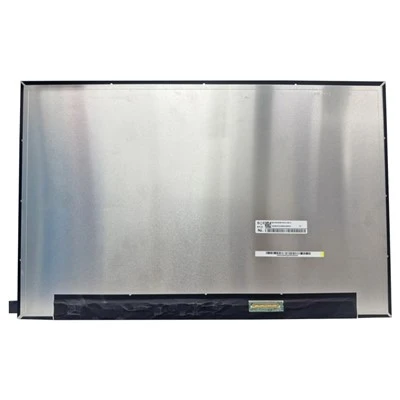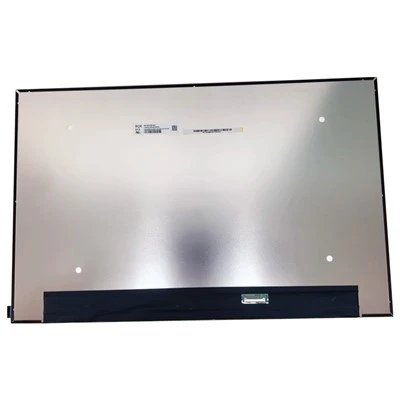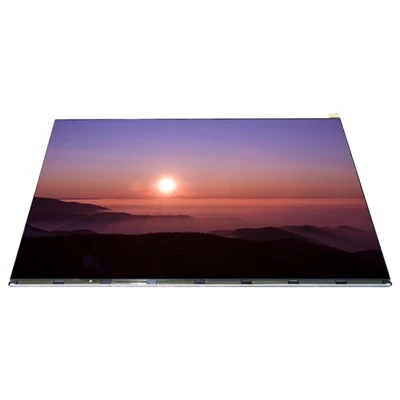

TFT-LCD--thin film transistor liquid crystal display. TFT-LCD can display screen information with high contrast, high speed and high brightness. These are all researched and developed by mankind in the past century. What is its development process? ? The following will give you a detailed introduction to the development process of TFT-LCD.

1. Historical review
In 1888, F. Reinitzer, an Austrian plant cigar, was observing the crystallization characteristics of plants and found that if the temperature was raised to 145C, the crystals would appear white, and when heated to 172°C, they would appear transparent. The physicist O. Lehmann named it liquid crystal after research, this is the beginning of liquid crystal display technology
In terms of driving, TFT-LCD has mainly experienced the development process of passive liquid crystal display and active liquid crystal display.
2 TFT-LCD's technological development exceeds the trend
With the widespread application of TFT-LCD in mobile phones, notebook computers, TVs, monitors and industrial equipment displays, the development trend has been rapid in recent years and has attracted people's attention. The future development of TFT-LCD technology is overwhelming, mainly in terms of high resolution, wide viewing angle, low cost, high brightness, and low power consumption.
2.1 High resolution
In order to realize a large-area high-resolution liquid crystal display, it is generally necessary to use high-performance switching elements, low-impedance metal materials, and high-precision processing techniques. Now the most researched and used material is aluminum.
In May 1988, IBM used A1-Nd alloy as the gate electrode and developed a 16.3-inch ultra-high-resolution (200ppi) a-SiTFT-LCD, which has been mass-produced.
In April 1999, Toshiba introduced a 20.8-inch 16-SVGA (3200X2400) a-SiTFT-LCD, which can be said to represent the highest level of a-SiTFT-LCD in terms of high resolution and high capacity.
Another important way to realize high-resolution liquid crystal displays is to develop LTp-SiTFT technology. For now, the resolution of published p-SiTFT-LCD products is generally around 200ppi. Compared with a-SiTFT-LCD, LTp-SiTFT-LCD has a relatively small volume of film transistors and storage capacitors, it is precisely because of this, it has a stronger penetration area per inch, so there is a brighter The display screen is more energy-saving.
2.2 Wide viewing angle
The visual angle of view refers to the angle between the line of sight and the plane of the vertical screen when the picture with the contrast CR≥10 can be just seen. With the continuous development of LCD display technology, the wide viewing angle mode has now become the goal pursued by the industry. At present, the mainstream TFT-LCD wide viewing angle technologies mainly include: VA.TN+Film, IPS and FFS.
In 1973, Rasoef of the United States put forward the concept of lateral electric field driving in IPS mode for the first time. In 1992, G Baur of Germany pointed out that IPS is beneficial to improve the viewing angle characteristics of LCD.
In 1995, Hitachi’s MOh-e and others began to study the application of IPS to TFT-LCD panels, and successfully developed the first IPS panel product the following year, which opened the prelude to the widespread application of IPS technology.
In 1997, S. Aratani et al. proposed the S-IPS mode, which greatly improved the problem of chromatic aberration, making S-IPS a superior wide viewing angle technology with low chromatic aberration and wide viewing angle.
In 2003, Y. Nakayoshi and others developed a liquid crystal panel equipped with AS-IPS technology, which can increase the penetration rate of S-IPS by about 30%.
In 2006, Lin Junxiong of HannStar Display Co., Ltd. of China, based on AS-IPS, successfully developed an IPS panel of AS-NOOC. The light transmittance is about 10.8% higher than that of AS-IPS, and the viewing angle exceeds 176. °, but also has lower cost, better color, stability and other excellent performance. At present, IPS mode has become one of the best modes for TFT-LCD to achieve wide viewing angle.
2.3 Low cost
Under normal circumstances, reducing costs has become an important rule for many companies to survive. Therefore, reducing the number of masks, increasing the production capacity of the base, increasing the size of the glass substrate, increasing the production capacity and product yield of the base, and purchasing nearby raw materials, etc. Most TFT-LCD manufacturers continue to work hard. The glass substrate is an important raw material for the production of thin film transistor liquid crystal display (TFT-LCD), and the cost accounts for about 15% to 18% of the total cost. After just two decades of viewing angle, it has been It has developed to the current tenth generation line (2,850mmX3,050mm). The core of TFT production technology is photolithography, which is an important part of determining product quality and a key part that affects product cost. The TFT production process has evolved from the 8-mask or 7-mask lithography process in the early stage to the commonly used 5-mask or 4-mask lithography process, which greatly reduces the production cycle and production cost of TFT-LCD. In recent years, South Korean companies such as LGD and Samsung have made breakthroughs in the development of the 3-mask lithography process and have achieved mass production. However, because the 3-mask process technology is difficult and the yield rate is low, it is still going further. Is being improved and developed.
2.4 High brightness
The LCD screen itself is a non-luminous device, so it is not convenient to use in dark places. In order to improve its visibility, it is necessary to use a backlight to uniformly illuminate the display surface from the back. However, increasing the brightness of the TFT-LCD display screen by enhancing the brightness of the backlight source may pay a higher price. Therefore, increasing the light transmittance is an important development trend of the current liquid crystal display industry. Now in the production of liquid crystal panels, generally by increasing the aperture ratio of the pixels, using low-impedance buses, high-transmittance polarizers, and CF on Array, etc., the high-brightness requirements of TFT-LCD can be achieved.
2.5 Low power consumption
In May 2008, CCLai et al. proposed an adaptive adjustment technology. Through the adaptive adjustment algorithm of the backlight module, the power consumption of the backlight can be reduced by 31%, and the image contrast can be increased by about 20.75%. Very effective method to reduce the power consumption of TFT-LCD.
In October 2008, Ye Qiang and others designed a low-dropout linear regulator (LDO) with low quiescent current using dual adaptive compensation. Experiments have shown that this compensation method requires almost no additional current consumption, so It is extremely suitable for the low power consumption design requirements of TFT-LCD.
Conclusion: With the continuous growth and development of the LCD industry, the LCD display represented by TFT-LCD has now replaced CRT and has become the mainstream of the display field. At the same time, as the core and pillar of the electronic information industry, TFT-LCD is promoting the vigorous development of new equipment, new materials, system applications, and intelligent software with its remarkable pulling effect and wide radiation range.