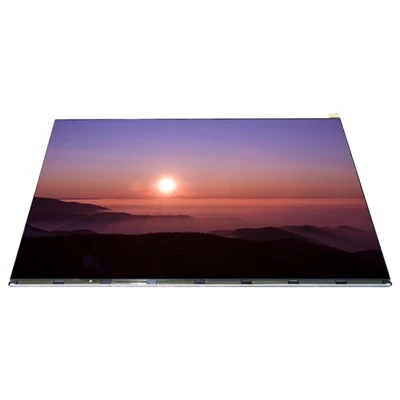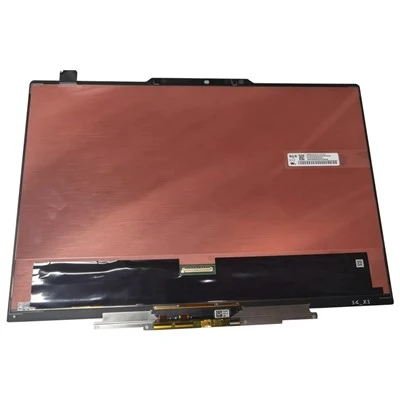

Today, LCD liquid crystal displays have infiltrated various electronic terminals that need to display images and data. Among the numerous flat panel display technologies, TFT-LCD occupies the absolute mainstream. What is the basic structure of a monochrome LCD screen.
1. Backlight board: The imaging principle of LCD is to control the brightness and darkness by blocking the light component of the liquid crystal. Therefore, a light source is necessary to see the image on the screen. Therefore, the backlight board is responsible for providing the most basic light source for LCD display.
2. Lower polarizing plate: The lower polarizing plate is responsible for the work of standardizing the direction of light to the liquid crystal layer.
3. Film substrate: The twist angle of liquid crystal molecules is controlled by TFT.
4. Liquid crystal: The liquid crystal molecules in this layer are twisted under the control of TFT, so that the light in the same direction can be turned on and controlled, so that the brightness of the light to the rear pixel unit is changed.
5. Color filter: The inventor of this thing estimates that the inspiration came from the liquid crystal display.
From the perspective of the structure of the liquid crystal display, whether it is a laptop or a desktop system, it uses a layered structure composed of different parts. The LCD consists of two glass plates with a thickness of about 1 mm, separated by a uniform interval of 5 μm containing liquid crystal (LC) materials. Because the liquid crystal material itself does not emit light, there are lamp tubes as the light source on both sides of the display screen, and there is a backlight plate (or even light plate) and reflective film on the back of the liquid crystal display screen. The backlight plate is composed of fluorescent materials. It can emit light, and its main function is to provide a uniform background light source. The light emitted from the backlight enters the liquid crystal layer containing thousands of crystal droplets after passing through the first polarization filter layer. The crystal droplets in the liquid crystal layer are all contained in a small cell structure, and one or more cells constitute a pixel on the screen. There are transparent electrodes between the glass plate and the liquid crystal material. The electrodes are divided into rows and columns. At the intersection of the rows and columns, the optical rotation state of the liquid crystal is changed by changing the voltage. The role of the liquid crystal material is similar to that of small lights. valve. Around the liquid crystal material are the control circuit part and the drive circuit part. When the electrodes in the LCD generate an electric field, the liquid crystal molecules will be twisted, so that the light passing through it will be refracted regularly, and then filtered by the second layer of filter layer and displayed on the screen.
The technique is to fill the liquid crystal between two planes lined with fine grooves. The grooves on these two planes are perpendicular to each other (intersect at 90 degrees). In other words, if the molecules on one plane are arranged north-south, the molecules on the other plane are arranged east-west, and the molecules between the two planes are forced into a 90-degree twisted state. As the light travels along the direction of the molecular arrangement, the light is also twisted 90 degrees when passing through the liquid crystal. But when a voltage is applied to the liquid crystal, the molecules will be re-arranged vertically, so that the light can be directed out without any twisting.
LCD relies on polarization filters (plates) and light itself. Natural light diverges randomly in all directions. The polarization filter is actually a series of increasingly thinner parallel lines. These lines form a net, blocking all light that is not parallel to these lines. The line of the polarization filter is exactly perpendicular to the first one, so it can completely block the polarized light. Only when the lines of the two filters are completely parallel, or the light itself has been twisted to match the second polarized filter, the light can penetrate.
LCD is composed of two polarized filters that are perpendicular to each other, so under normal circumstances, all light that attempts to penetrate should be blocked. However, because the two filters are filled with twisted liquid crystals, after the light passes through the first filter, it will be twisted 90 degrees by the liquid crystal molecules, and finally pass through the second filter. On the other hand, if a voltage is applied to the liquid crystal, the molecules will rearrange and be completely parallel, so that the light will no longer be twisted, so it will be blocked by the second filter. In short, power is applied to block the light, and no power is applied to cause the light to emerge.
However, the arrangement of the liquid crystals in the LCD can be changed so that light is emitted when power is applied, but is blocked when power is not applied. However, because the computer screen is almost always on, only the solution of "powering on and blocking the light" can achieve the most power saving purpose.