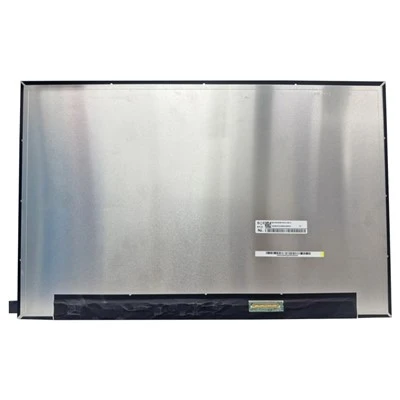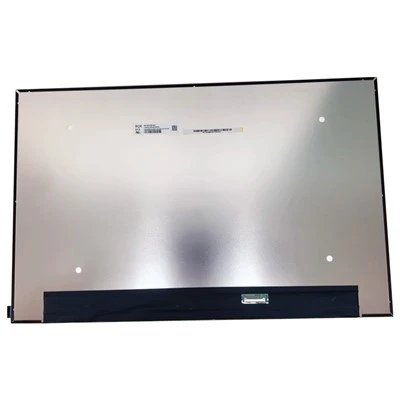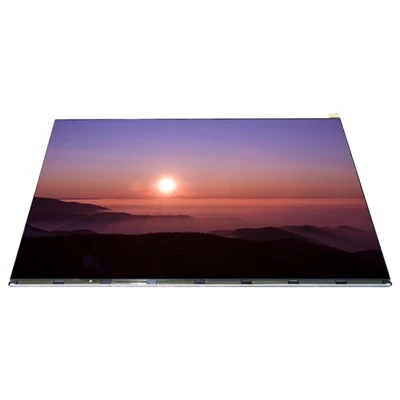

Industrial liquid crystal display is a display with display function used in industrial environment. From the appearance point of view, it is not very different from ordinary display. So, how to distinguish industrial liquid crystal display from ordinary liquid crystal display? What is the difference between the two? Mainly look at the following points:
1. Stability.
Industrial liquid crystal display, dustproof performance is more stable. Ordinary liquid crystal displays are only used in small spaces, such as homes and living rooms. Relatively speaking, the environment is relatively clean, and the temperature and humidity control is relatively reasonable. However, industrial LCDs often appear in industrial places with harsh working environments, where there is more dust, and the temperature and humidity are not very stable. Therefore, the dustproof performance of the whole industrial LCD display is better.
Industrial LCD monitors are suitable for long-term uninterrupted use. They are very different from personal and family usage habits. Industrial LCD monitors often run 24 hours a day. In terms of display panel types and materials, the two are basically the same, but long-term work. The accumulated heat can easily age electronic products. Therefore, the heat dissipation performance of industrial liquid crystal displays is stronger than that of ordinary liquid crystal displays, and additional heat sinks and cooling fans must have special requirements. There are certain standards and regulations in related industries.
Industrial LCD monitors must be guaranteed to work in a variety of "uncomfortable environments" and 24-hour uninterrupted work. To improve the stability of industrial LCD monitors, additional settings are required, which increases a certain cost.
2. The brightness is higher than that of ordinary products.
Since industrial liquid crystal displays generally appear in open spaces and have better lighting, the brightness of household TVs and civilian displays is difficult to meet the demand. Therefore, high brightness is also a major feature of industrial liquid crystal displays, and the cost is difficult to estimate.
3. The display area is very different.
Whether it is a monitor or a TV, the display area and display ratio have certain industry standards. For example, liquid crystal display sizes are 32 inches, 37 inches, 40 inches, 42 inches, 46 inches, etc.; while the display ratios are all controlled at 4:3, 16:9, and 16:10, and special ratios generally do not appear. In this regard, in order to meet the promotion and demonstration needs of special venues, industrial liquid crystal displays will have products with non-standard display ratios, such as long strips, or squares. Industrial liquid crystal displays designed for special needs are naturally more expensive than products produced by general-purpose assembly lines.
4. For special applications, add equipment.
Industrial LCD displays, in order to achieve the purpose of demonstration, demonstration effects, there will be a lot of additional hardware support, including special equipment such as advertising machines. Splicing technology increases the cost. Many industrial liquid crystal displays will use splicing and other technologies to achieve large display area and higher resolution. The realization of splicing applications will have corresponding hardware support and software support, which will increase a lot of costs accordingly.
Moreover, display devices for splicing, such as liquid crystal displays, have very narrow edges, generally less than 1 cm, in order to reduce the sense of separation between the edges, while the minimum frame of high-end products is only 4 mm, and their prices remain high.
Five, the difference in interface layout.
In civilian displays, there are generally only three interfaces, VGA, DVI and HDMI, and DP interfaces are relatively rare; in industrial applications, BNC interfaces have special uses. In terms of TV sets, it emphasizes the diversity of interfaces, which can connect more audio-visual equipment, with the largest types and numbers of interfaces.
But for customized products, industrial LCDs often have only a dedicated video interface, plus a programmable control S232 serial port.
Sixth, power consumption, pay attention to differences.
Products for household or personal use will pay more attention to power consumption and advocate environmental protection and energy saving. In this regard, industrial displays do not deliberately require lower power consumption, but only require stability; additional cooling systems, high-bright backlighting and other designs will greatly increase power consumption.
Of course, for many industrial LCDs to achieve special needs, such as 3D presentations, or even naked-eye 3D, the equipment cost is much higher than that of civilian products that we can touch.